本文已于2026年3月在线发表于Journal of Nuclear Medicine and Molecular Imaging杂志
文章链接(Article Link):https://mednexus.org/doi/epdf/10.65457/JNMMI-2026-00xx-11
引用本文:Yu H, Yang Y, Li X, Hu X, Guo, J, Wu H, Wang J, Wang K, Han Z, Sun X, Yang L. 18F-ARS-1620: Radiosynthesis and therapy response evaluation of a KRASG12C-targeted PET tracer in tumor-bearing mice. J Nucl Med Mol Imaging 2026
How to cite this article: Yu H, Yang Y, Li X, Hu X, Guo, J, Wu H, Wang J, Wang K, Han Z, Sun X, Yang L. 18F-ARS-1620: Radiosynthesis and therapy response evaluation of a KRASG12C-targeted PET tracer in tumor-bearing mice. J Nucl Med Mol Imaging 2026
KRAS(Kirsten大鼠肉瘤病毒癌基因同源物)是非小细胞肺癌(NSCLC)中最常见的驱动基因突变之一,其中KRASG12C亚型近年来取得重大突破,从长期被认为“不可成药”的分子靶点成功转化为可精准干预的治疗对象。然而,在临床实践中,基因突变状态与蛋白表达丰度之间常存在不一致的现象,仅依赖基因检测难以全面反映体内真实表达水平。因此,建立一种能够在体内无创识别KRASG12C表达状态并动态监测治疗反应的分子影像技术,对于实现精准分型和个体化治疗具有重要意义。
KRAS mutations are the most prevalent oncogenic alterations in non–small cell lung cancer (NSCLC), with the KRASG12Csubtype being a major target. The recent clinical success of KRASG12Cinhibitors has marked a milestone in precision oncology, transforming a long-standing “undruggable” target into a therapeutic reality. However, discrepancies between genomic mutation status and functional protein expression, as well as the dynamic changes during treatment, limit the accuracy of patient stratification and response evaluation. Therefore, a noninvasive method capable of visualizing KRASG12Cexpression in vivois critically needed.
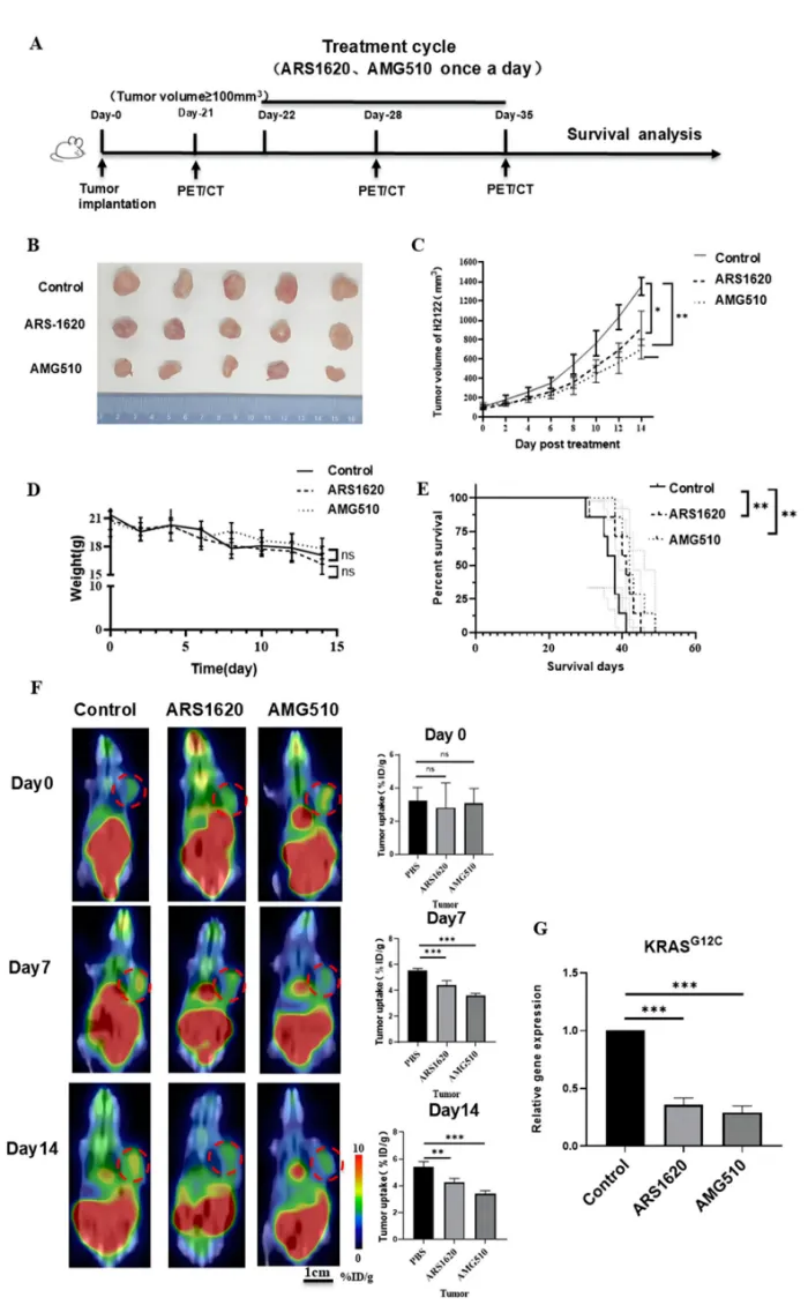
本研究成功构建了一种新型18F标记的PET分子成像探针——18F-ARS-1620,该探针通过对KRASG12C小分子抑制剂ARS-1620类似物进行放射性标记制备而成。利用放射性高效液相色谱(radio-HPLC)对其稳定性及理化性质进行了系统评价,18F-ARS-1620具有较高的放射化学产率和纯度。在KRASG12C高表达的NSCLC模型中,18F-ARS-1620 在体外和体内均表现出较高的特异性,在 KRASG12C高表达肿瘤中的摄取显著高于低表达对照组。荷瘤鼠PET/CT成像结果显示,在KRASG12C抑制剂治疗后,探针摄取显著下降,并与肿瘤生长抑制及生存期延长呈相关性。
In this study, we developed a novel 18F-labeled PET molecular imaging tracer, 18F-ARS-1620, derived from a KRASG12Cinhibitor analog. The tracer was synthesized with high radiochemical yield and purity, and demonstrated favorable stability. In KRASG12C-overexpressing NSCLC models, 18F-ARS-1620 exhibited high specificity and significantly greater uptake in KRASG12C-high tumors compared with low-expression controls, both in vitroand in vivo. Importantly, longitudinal PET/CT imaging revealed a marked reduction in tracer uptake following treatment with KRASG12Cinhibitors, which correlated with tumor growth suppression and prolonged survival.
综上所述,18F-ARS-1620作为一种精准成像分子探针具有良好的临床转化潜力。能够实现KRASG12C表达水平及治疗反应的实时、无创评估,该策略有望提高优势人群筛选的准确性,促进早期疗效评价,并指导NSCLC的个体化治疗决策。本研究为推动KRAS靶向精准肿瘤学的发展提供了一种具有前景的分子影像学方法。
These findings highlight the clinical translational potential of 18F-ARS-1620 as a precision imaging biomarker. By enabling real-time, noninvasive assessment of KRASG12Cexpression and therapeutic response, this strategy may improve patient selection, facilitate early efficacy evaluation, and guide personalized treatment decisions in NSCLC. Collectively, this work provides a promising molecular imaging approach for advancing KRAS-targeted precision oncology.
18F-ARS-1620 PET分子成像监测肺癌KRAS靶向治疗疗效
18F-ARS-1620 PET imaging for treatment monitoring
团队介绍
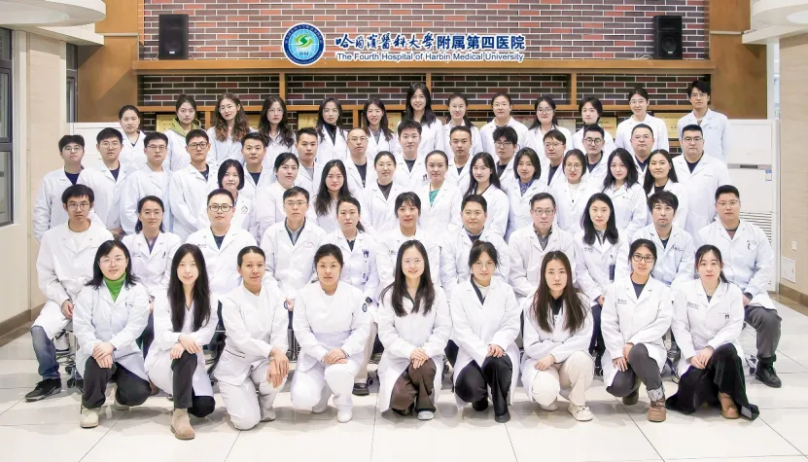
作者单位信息:
(1)哈尔滨医科大学附属第四医院核医学科;
(2)国家卫生健康委员会 分子探针与靶向诊疗重点实验室,哈尔滨医科大学分子影像研究中心
The author's affiliation information:
1. Departmentof Nuclear Medicine, the Fourth Affiliated Hospital of HarbinMedical University, Harbin, Heilongjiang 150001, China;
2.NHC Key Laboratoryof Molecular Probe and Targeted Diagnosis and Therapy, Molecular ImagingResearch Center (MIRC) of Harbin Medical University, Harbin, Heilongjiang150028, China.